It was a cold and snowy February in 2011 when I arrived in Frankfurt, Germany for a month-long work project. As I made my way from the airport to my hotel, I could not help but feel a sense of excitement and adventure. I felt like one of the many businessmen and women that I would see at the airport going off to far and distant places. Do you remember in an earlier episode when I said I sat at my living room window starring at the on and off ramps of the George Washington and Tri-borough Bridge wonder and fanaticizing about where they were going…well when I worked at the airport I would see these people’s faces, hear their voices, and now I have become one of them.
As a youngster Germany was not on my list of places to visit, but when an opportunity to spend a month in Frankfurt availed itself to me, I jumped at that opportunity. Let me give you a brief rundown of this “opportunity.” I am a spatial learner; in other words, I retain information better if I can visualize it.
As such, at work I would create screenshots for visual instructions because it’s an effective way to guide me through a process or task. There were several steps that I would follow to create effective screenshots for this purpose.
After I have captured the screenshot, I would edit it as needed to make it clearer and more effective for instructional purposes. This might involve cropping the image to focus on a specific area, adding arrows or other visual aids to highlight important elements, or adding text to provide additional context or explanation.
Once I have edited the screenshot to my satisfaction, I would save it in a format that is suitable for use in my visual instructions. This might be a common image file format such as JPEG or PNG, or it might be a more specialized format depending on the needs of my instructions.
Keep in mind that initially this endeavor was for my own edification and singular consumption. However, since the company had no codified training protocol; whenever a new hire was onboarded, I would provide the new hire with this personal use training manual I had created. Word had gotten around about my training methods and manual. One individual the word made it out to was the Director of Cargo Sales for Germany, and he asked my manager if they would loan me to them so I could train his entire support staff in using our computer system. My manger said yes and off I went.
I was fortunate to be able to fly first class on this trip…ok, let me stop being overly modest and tell the truth. At this point I had been with the company for 23 years and I was very strategic with my travel. In other words, I would research destinations, the flight’s historical data, and juxtapose my seniority against others traveling with the purpose coming up with a first-class boarding probability. Another way of putting that is I would always know if the possibility for traveling first class was between 25% and 50%, 51% to 75% 76% to 90% and above 90% was called, “smelling myself mode. I was in “smelling myself mode.”
Traveling in first class anywhere is an incredible experience only to be augmented to the Nth degree when the aircraft is a widebody with lie-flat seats. So basically, your seat turns into a freakin bed. You get bedding designed by Saks-Fifth Avenue, complementary premium alcohol, a five-course meal, with a choice of one of three entrées to be consumed using actual silverware.
Oh, ohh, the pampering began before I even got on the plane because I had access to the first-class lounge at the airport. This was a quiet, peaceful place to relax and unwind before my flight. There is no fighting over the use of power outlets, this is comfortable and spacious seating, plenty of refreshments, and even showers.
Once boarding begins, I was able to board using the priority lane. The seats were spacious and comfortable, with plenty of room to stretch out and relax. The in-flight service was top-notch, with attentive flight attendants bringing me drinks and snacks throughout the journey. The meals were also delicious, with a variety of high-quality dishes to choose from. The menu used words like, “this accompanied with that, a medley of this, that, and a third.
In first class, that nine and half hour flight seemed like three to me. Anyway, enough about that. Now I arrived in Frankfurt and stayed at The Sheraton which is literally attached to the airport main terminal. I checked in and unpacked and was ready for my assignment on Monday morning.
On that first day I began the session by introducing myself and explaining the purpose of the training. I then provided an overview of the new reservation system, highlighting its key features and benefits.
As we progressed through the training, I noticed that some of the staff were struggling to understand certain concepts. To help them better grasp the material, I provided additional examples and explanations and encouraged them to practice using the system on their own.
To further reinforce the training, I also made myself available for one-on-one support if any of the staff needed additional help.
Training the support staff on the new reservation system was a crucial task, as it would ensure that the team was able to effectively use the system to serve customers and manage reservations.
Next, we focused on the basics of using the system, such as logging in and navigating the various menus and options. This included learning how to access customer information, create and modify reservations, and process payments. The team practiced these tasks through hands-on exercises and role-playing scenarios to ensure that they were comfortable with the basic functions of the system.
As we progressed through the training, we began to delve into more advanced topics. This included learning how to troubleshoot common issues that might arise when using the system, such as error messages and technical problems. The team also learned how to customize the system to meet the specific needs of our business, such as setting up custom email templates and generating reports.
Throughout the training period, I made sure to provide ongoing support and guidance to the team. This included one-on-one coaching sessions with team members who needed extra help, as well as regular check-ins to ensure that everyone was on track with their learning. I also made myself available to answer questions and provide assistance as needed.
Overall, the first two weeks of training the support staff on the new reservation system were successful. By the end of the training period, the team was confident and competent in their ability to use the system to serve customers and manage reservations. I felt confident that this training was going to pay off in the long run, as it will enable the team to provide better service to our customers and improve the efficiency of our business.
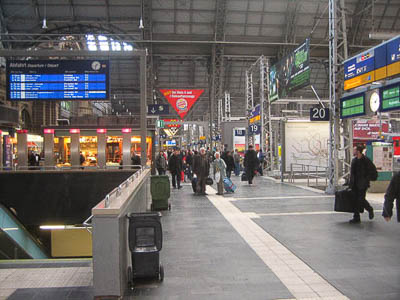
I knew that four weekends would fly by so I got started early with my exploration of the Frankfurt area. On perhaps my first free weekend I wanted to visit downtown Frankfurt, so I took the S8 metro line from Frankfurt International Airport to Frankfurt Hauptbahnhof. This is a rapid transit rail services that operate in the Frankfurt metropolitan area. These lines operate at intervals of 15 minutes or less and run from the airport to the city center. The journey takes about 11 minutes and tickets can be purchased from vending machines or ticket desks at the airport or at the Hauptbahnhof.
As I walked through the plaza, I noticed a group of people huddled around a street performer who was playing traditional German folk music on his accordion. I stopped to listen for a few minutes, feeling a sense of nostalgia wash over me as I listened to the melodies.
As I listened and marveled at the architectural intricacies of the Hauptbahnhof I wondered about the Frankfurt’s history. During the Nazi era, Frankfurt was an important city for the regime. It was the site of one of the first concentration camps, where political prisoners and Jews were held and brutally treated. The city also served as a center for Nazi propaganda and cultural organizations. Frankfurt's Jewish community was particularly targeted, with synagogues being destroyed and many Jews being rounded up and sent to extermination camps. The city was heavily bombed by The Allies during World War II, causing widespread destruction and loss of life. The end of war and the American occupation of Frankfurt marked the end of Nazi rule in the city and the beginning of a long process of reconstruction.
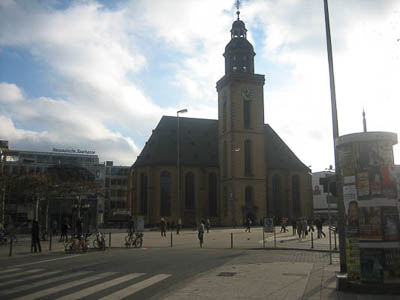
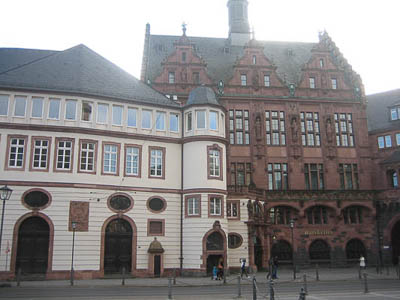
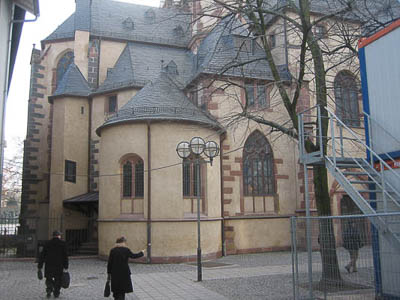
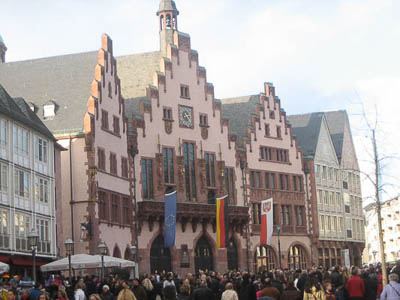
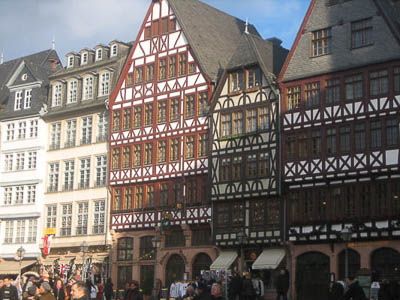
Today Frankfurt is known as a business center, which it is, but it also has a rich history, the pre-dates the Nazi regime, and a vibrant cultural scene, giving it a wide-ranging appeal to travelers. Some must-see sites in Frankfurt include the Frankfurt Cathedral, a beautiful Gothic church with a stunning interior; the Goethe House, the birthplace of famous German writer Johann Wolfgang von Goethe; the Frankfurt Museum of Modern Art, which features works by artists such as Pablo Picasso and Andy Warhol; and the Römerberg, the city's historic central square. /p>
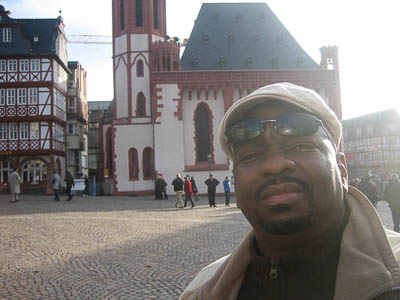
The Römerberg is a popular tourist destination, known for its charming architecture and rich history. On the square, visitors can see the Römer, the Old St. Nicholas Church, and the historic Town Hall, which dates back to the 15th century.
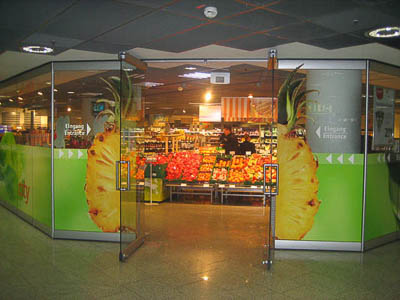
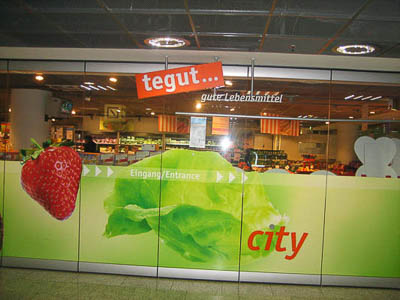
The second weekend the only exploring I did was to the Tegut supermarket which was, and I believe still is in the airport. That’s right…a supermarket in the airport. So, my second weekend consisted of going downstairs to one of the hotel’s restaurants for breakfast, back to the room to watch TV and vegetate, then later going further downstairs to food shop at Tegut. Shopping at Tegut meant I did not have to rely on eating fast food every day and helped me stay within my budget.
The final two weeks of training I played a role more as a comfort blanket, more of an overseer than a trainer. This was because the team members were able to pick up the training material and were able to apply it effectively in their work. I acted as a resource for them, answering questions and providing guidance as needed. I took a step back and let the team run with the training on their own. It was rewarding to see them succeed and use the skills they had learned to improve their performance. Overall, it was a great experience working with such a capable team. My final two weekends I decided to take day trips to Baden-Baden and Strasbourg.
If you are planning a trip to Baden-Baden and Strasbourg, there are a few things that you might want to consider. First, it is a good idea to plan your itinerary in advance and make any necessary reservations or bookings ahead of time. This will help you make the most of your time in each city and ensure that you don't miss out on any must-see attractions. Both Baden-Baden and Strasbourg are easily accessible by private tour companies, and you should have no problem getting around once you arrive.
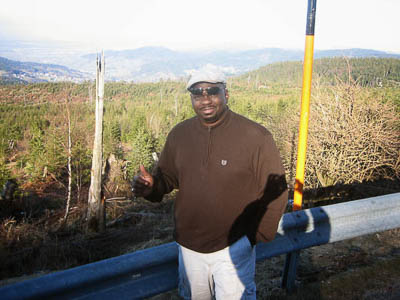
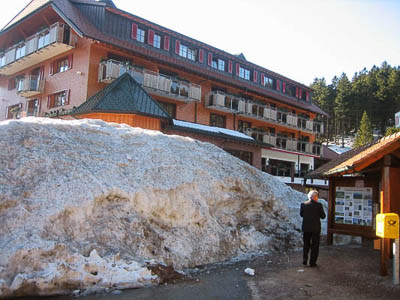
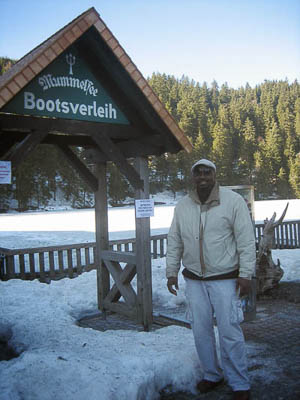
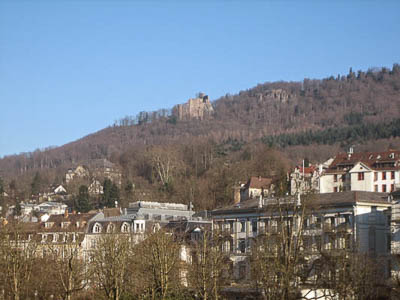
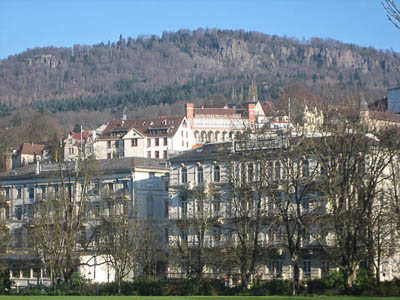
Baden-Baden is a spa town in the state of Baden-Württemberg in southwestern Germany, known for its thermal baths, casinos, and cultural attractions. The town is located in the Black Forest region and is known for its beautiful landscape and mild climate. Some popular things to do in Baden-Baden include visiting the Roman-Irish Baths, the Casino Baden-Baden, and the Friedrichsbad thermal baths. The town is also home to a number of museums and cultural attractions, such as the Faberge Museum and the Museum of Fine Arts, as well as a concert and opera house.
The Faberge Museum in Baden-Baden is a must-see destination for anyone interested in art and history. The museum houses an extensive collection of Faberge eggs, as well as other works of art by Peter Carl Faberge.
In early 1885 Tsar Alexander III and his son, Tsar Nicholas II, commissioned Russian jeweler Peter Carl Faberge to create the eggs as Easter gifts for their wives and mothers. They became known for their beauty, intricate detail, and the surprise inside each egg. The eggs were made of precious materials such as gold, silver, and gems, and were ornately decorated with intricate detailing. Each egg contained a hidden surprise, such as a miniature work of art or a clock.
The Tsar was so pleased with the egg that he commissioned Faberge to create one for the Tsarina every year thereafter. The tradition was continued by his son, Tsar Nicholas II, who also commissioned Faberge eggs as Easter gifts for his wife, Alexandra Fedorovna. The tradition of creating Faberge eggs for the Russian Imperial family continued until the fall of the Russian monarchy in 1917. Today the Faberge eggs are considered some of the most famous and valuable works of art in the world.
In addition to the eggs, the museum also displays a variety of other artworks, including jewelry, figurines, and decorative objects. The museum's exhibits are well-curated and provide a fascinating glimpse into the history of Faberge and the Art Nouveau movement. Whether you are a fan of Faberge or just looking for something unique to do in Baden-Baden, the Faberge Museum is a great choice.
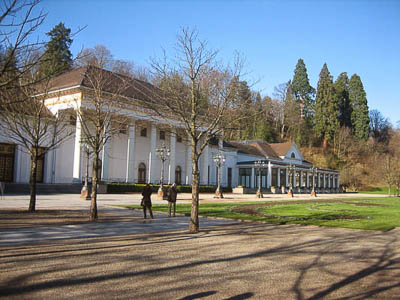
If you are a fan of gambling, you might also want to visit the Casino Baden-Baden, one of the most famous casinos in Germany. Twenty Euro loss was my limit. The casino is located in a grand 19th-century building, and offers a range of games, including roulette, blackjack, and poker. The casino is a popular spot for both tourists and locals and is a great place to try your luck and enjoy a night out.
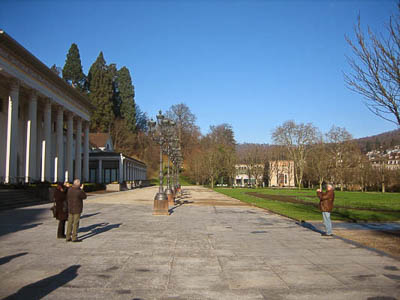
Aside from its cultural attractions, Baden-Baden is also known for its beautiful natural surroundings. The town is located in the heart of the Black Forest, and is surrounded by forests, hills, and meadows, offering a range of outdoor activities for visitors. You can take a hike in the forest, go horseback riding, or visit one of the many local farms and vineyards. The town is also home to a number of excellent restaurants, serving a range of local and international cuisine, making it a great place to enjoy a meal or a drink.
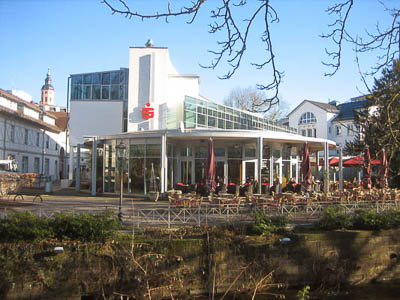
If you are a classical music or architectural aficionado, you might also want to check out the Festspielhaus, a concert and opera house located in the center of Baden-Baden. The Festspielhaus is one of the largest and most important concert halls in Germany, and hosts a range of performances, from classical music concerts to ballets and operas. The building itself is a work of art, with a grand neoclassical design and excellent acoustics, making it an ideal place to enjoy a performance.
The building itself is a notable example of modern architectural design, and tours of the facility are available to the public for around 10€. It is definitely a must-visit destination for music lovers and architectural enthusiast. I thought it was 10€ well spent.
Overall, a trip to Baden-Baden is a great way to relax, rejuvenate, and experience the culture and beauty of Germany. Whether you are interested in soaking in the thermal baths, trying your luck at the casino, or exploring the town's cultural attractions, Baden-Baden has something for everyone.
The following weekend I woke up early and packed a bag with a few essentials for a day trip to Strasbourg, a charming city located just across the border in France. After grabbing a quick breakfast at a local café, I set off on my journey.
I was picked up from my hotel and went on a guided mini-bus tour from Frankfurt and it took about two hours to reach Strasbourg. The ride was comfortable and picturesque, with views of rolling hills and quaint towns passing by the window. As we approached Strasbourg, I marveled at the architecture of the city's historic buildings, with their distinctive, red-tiled roofs and intricate stonework.
Strasbourg is the capital and largest city of the Grand Est region in northeastern France, located on the border with Germany. The city is known for its beautiful historical center, which is a UNESCO World Heritage Site, and is home to a number of important cultural institutions, such as the European Parliament and the Council of Europe. Some popular things to do in Strasbourg include visiting the Notre Dame Cathedral, the Palais Rohan, and the Petite France quarter, which is known for its picturesque canals and half-timbered houses. The city is also home to a number of excellent restaurants and is known for its Alsatian cuisine, which combines French and German culinary traditions.
Here is a little background on Strasbourg. During the 1930s and 1940s, Strasbourg was a city at the center of significant political and cultural events. In 1930, the city became part of France after the signing of the Treaty of Versailles following World War I. In the years leading up to World War II, Strasbourg was a hub of intellectual and cultural activity, with many writers, artists, and intellectuals living and working in the city.
However, the city's history during this time was not without conflict and tragedy. In 1940, during the Nazi occupation of France, Strasbourg was annexed by Germany and became part of the Third Reich. Many of the city's residents, including Jews, political dissidents, and other minority groups, were subjected to persecution and discrimination. Many were forced to flee the city, and some were deported to concentration camps.
Despite the hardships of the era, Strasbourg's history during this time is also marked by acts of resistance and bravery. Many of the city's residents actively opposed the Nazi occupation, and the city played a key role in the French Resistance movement. After the war ended in 1945, Strasbourg was returned to France and began to rebuild and recover from the devastating effects of the war. Today, the city is a vibrant and thriving community, with a rich history that includes both triumph and struggle.
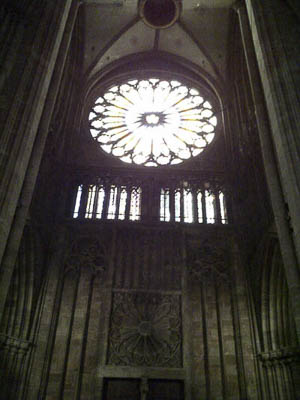
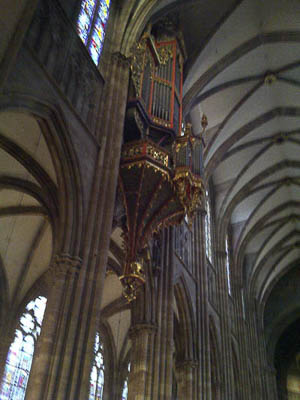
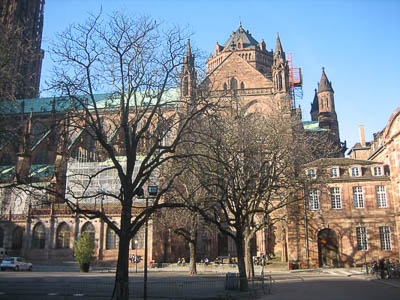
Upon arriving in Strasbourg, we made my way to the city center, where we spent the morning exploring the many sights and attractions. One of the first places we visited was the beautiful, Gothic-style Strasbourg Cathedral, which dates back to the 13th century. The interior of the cathedral was just as breathtaking as the exterior, with its soaring arches, stained glass windows, and intricate carvings.
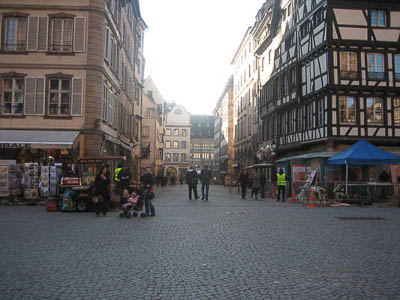
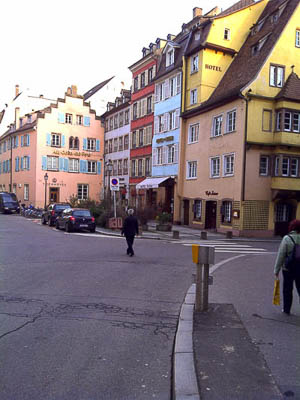
Next, we made our way to the city's famous Petite France district, a charming neighborhood filled with narrow, winding streets and colorful, half-timbered houses. We strolled through the streets, taking in the sights and sounds of the bustling area, and stopped to grab a bite to eat at a quaint, outdoor café.
I can remember texting a friend of mine, the following; “I am sitting at an outdoor café in Strasbourg, France sipping on tea while keeping one eye on my mark. I feel like James (f’ing) Bond.” Needless to say, there was no “Mark” I was keeping my eye on, but in my mind’s eye, this is what the scene reminded me of.
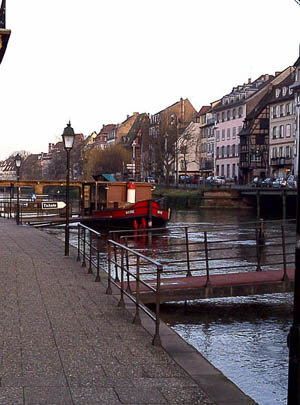
After lunch, the afternoon was unguided and we were instructed by the guide to meet back at the Cathedral at 1800 for the return ride to Frankfurt. With my free time I decided to take a leisurely boat tour of the city's waterways, which offered stunning views of Strasbourg's beautiful bridges and other landmarks. As we floated down the river, I couldn't help but feel a sense of peacefulness and serenity wash over me.
After the boat tour on the river Ill concluded and the early afternoon turned mid-afternoon, I made my way back to the Cathedral just to meander up and down the cobblestone streets of Strasbourg and used my mind as a time machine.
As I closed my eyes and focus my mind, I felt myself traveling back in time, transported to the ancient city of Strasbourg. I am standing in the center of the city, surrounded by bustling streets and towering buildings.
I look around and see the evidence of Strasbourg's rich history all around me. I see the ancient Roman walls that once protected the city, and the towering Gothic spires of Strasbourg Cathedral, which was built in the 13th century. I can sense the energy and activity of the city during its heyday as a center of trade and industry, and I can feel the excitement and intellectual curiosity of the intellectuals and artists who lived and worked here during the 19th and 20th centuries.
As I continue to explore the city's past, I am struck by the resilience and determination of its people. I see the struggles and hardships they faced during times of war and occupation, and I am inspired by their bravery and resistance. Despite the challenges they faced, the people of Strasbourg always found a way to persevere and rebuild, and their strength and spirit have left a lasting impact on the city's history.
As I return to the present, I am grateful for the opportunity to experience the rich and varied history of Strasbourg through the power of my own imagination. It has been a truly enriching and enlightening journey. I cannot remember how long this trip to the past lasted but once I was fully recovered from my self-induced trance, I knew I needed to hightail it back to the cathedral for the ride back to Frankfurt.
As I sat on the minibus, watching the landscape pass by the window, I couldn't help but feel grateful for the opportunity to experience such a wonderful day in Strasbourg.
Overall, my day trip to Strasbourg was a truly unforgettable experience. From the stunning architecture and beautiful natural surroundings, to the rich history and charming culture, there was something for everyone to enjoy. I left the city feeling thoroughly exhausted yet grateful for the experience.
As the end of my month-long stay in Frankfurt approached, I couldn't help but feel a sense of sadness at the thought of leaving this incredible city. However, I knew that I would always have the memories of my time in Frankfurt to look back on, and I left with a sense of gratitude for the opportunity to experience all that the city had to offer.
In conclusion, the combination of the overall success of the training project, with my excursions to downtown Frankfurt, Baden-Baden, and Strasbourg I consider my honorary one-month residency in Germany a huge success.
END.
Located in the northeastern part of the country, Maceió is the capital city of the state of Alagoas and is known for its beautiful beaches and rich culture. In addition to all of the academic and cultural experiences I had, I will also reflect on the personal growth and self-discovery I experienced during my time in Brazil.
I still remember the excitement I felt when I found out I would be returning to Rio de Janeiro for a second visit in 1993. My first trip to the city, just a year prior, had been a good introduction to the vibrant culture, beautiful beaches, and delicious food, but it lack the interpersonal experience I was hoping for.